
Safeburn Chemicals Products
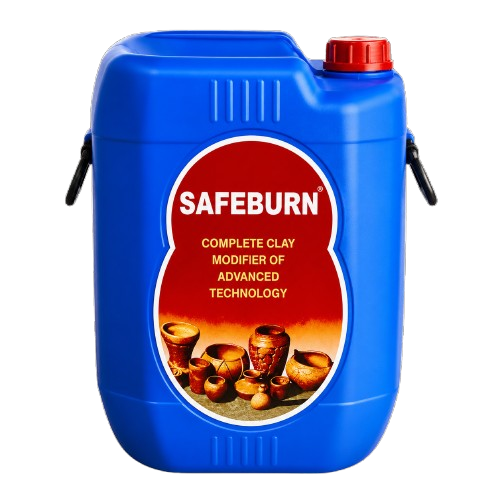
Safe Burn Chemicals Concrete 70 KG
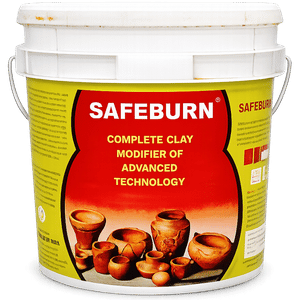
Safe Burn Chemicals Clay Bricks 27 KG
Red Bricks Chemical & Clay Brick Manufacturing
Brick manufacturing looks simple from the outside. Clay is prepared, shaped into bricks, dried and then fired in a kiln. In practice, each of these stages needs to be controlled carefully. The clay taken from one area may behave quite differently from clay taken from another location. Moisture, mineral content, plasticity and other properties can change the way the material works during production.
This is where a suitable red bricks chemical can be considered.
Red brick chemicals are used in some clay brick manufacturing processes to modify or support the behaviour of the raw material. The exact purpose depends on the product being used. Some products are intended to work with clay during preparation and mixing, while others may be developed for a particular production requirement.
There is no fixed chemical formula or dosage that can be applied to every brick plant. The right choice depends on the clay, the production method and the issue the manufacturer is trying to deal with. A product should therefore be tested with the actual raw material before it is introduced into regular production.
Understanding the Raw Material First
The quality of a finished brick starts with the raw clay.
Clay is a natural material, so its properties are not always the same. Even when two brick manufacturers operate in the same region, the clay available to them can be different. One may have clay that is easy to mould, while another may need more preparation before it can be used.
The moisture level matters too. If the clay contains too much water, moulding and drying can become difficult. If it is too dry, the material may not hold its shape properly.
Mineral content also affects what happens inside the kiln. The colour and behaviour of the finished brick depend partly on the minerals present in the clay and partly on the firing conditions.
For this reason, choosing a chemical for red brick manufacturing should begin with an understanding of the clay. It is much easier to choose a suitable product after the actual production problem has been identified.
What Does Red Bricks Chemical Do?
The answer depends on the product.
The phrase "red bricks chemical" covers a range of products used in the brick and clay industry. They may be supplied as powders, liquids or other formulations. Their intended use can also differ.
A manufacturer may use a clay modifier because the raw material is difficult to process. Another manufacturer may be looking for help with a particular production issue. The same product should not automatically be expected to produce the same result in both situations.
This is why technical information from the product manufacturer matters. The recommended dosage, mixing method and application stage should be followed instead of estimating the quantity.
A chemical additive is also only one part of brick production. If the clay is poorly prepared or the kiln is not operating correctly, adding a chemical will not automatically fix the entire process.
Where the Chemical Is Added
In many cases, a clay-processing chemical is introduced while the raw material is being prepared or mixed. The exact point depends on the formulation.
The clay may first be crushed and screened. Water can then be added to bring the material to the required working consistency. If the product instructions call for an additive at this stage, it needs to be mixed properly so that it is spread through the clay.
Good mixing is easy to overlook.
If one part of the clay receives more chemical than another, the bricks produced from that material may behave differently. This can make it difficult for the manufacturer to understand whether the product is actually helping.
For a factory, it is worth keeping a simple record of how much clay, water and chemical were used in a trial. The mixing time and production conditions can be recorded as well. These details become useful when the finished bricks are checked later.
Why Clay Behaviour Matters During Moulding
Once the clay has been prepared, it has to be shaped.
Some brick factories use manual moulding, while others use machines. The equipment may vary from a small local setup to a larger production line.
The clay needs to have a suitable consistency for the equipment being used. Material that is too wet can create handling problems. Material that is too dry may not form properly.
A suitable clay modifier for bricks may change certain properties of the material, depending on its formulation. But the manufacturer should first check whether the problem actually comes from the clay.
Mould condition, machine pressure, feeding rate and moisture content can all affect the shape of the brick.
It is common to look for a chemical solution when a basic adjustment to the production process may be enough. A good trial helps separate these possibilities.
Drying Is Often Where Problems Appear
Freshly moulded bricks contain a significant amount of moisture. They need to be dried before they can go into the kiln.
This stage needs patience and proper control.
If the outside of a brick dries much faster than the inside, the difference can create stress in the material. Depending on the clay and drying conditions, cracks or distortion may appear.
The weather can make a difference in traditional brick production. Temperature, humidity and airflow affect how quickly water leaves the brick.
The arrangement of bricks during drying matters too. If they are placed too close together, air movement may be restricted.
A chemical product may have an effect on the way clay behaves during drying, but the drying process itself still needs to be managed properly. It would be misleading to expect an additive to compensate for unsuitable drying conditions.
What Happens During Firing?
After drying, the bricks are fired in a kiln.
This is the stage where the clay undergoes major physical and chemical changes. The exact result depends on the raw material and the way the kiln is operated.
Temperature matters, but it is not the only thing that matters. Heating rate, firing time, airflow and cooling can all affect the finished brick.
The minerals naturally present in the clay also influence the final appearance. This is one reason why bricks made from different clay deposits can have different shades even when they are fired in similar kilns.
If a red brick chemical is intended to be used in connection with firing, the manufacturer should provide clear instructions about its use. It should not be added to a kiln simply because it is described as a brick chemical.
Dealing With Cracks in Bricks
Cracking is one of the problems that can occur during brick production.
There is no single cause.
A brick can crack during moulding, while it is drying, or after it enters the kiln. The reason needs to be investigated before deciding what to change.
For example, excessive moisture can create drying problems. Uneven drying can also cause stress. The clay itself may have a high level of shrinkage. Firing conditions can create another set of problems.
If a manufacturer is considering a red bricks chemical because of cracking, it makes sense to first identify when the cracks appear.
That small detail can tell you a lot:
- Cracks appearing in freshly moulded bricks point towards one set of possible causes.
- Cracks appearing after drying suggest another.
- Cracks that develop during firing require a different investigation.
A chemical may be useful in some cases, but it should be selected after the problem has been understood.
Uneven Brick Colour
Brick manufacturers may also notice differences in colour between batches.
Red colour comes mainly from the composition of the clay and what happens during firing. Iron-containing minerals can contribute to the familiar red appearance of fired clay, but the final shade depends on the complete process.
If the clay source changes, the colour may change with it.
Kiln conditions can also affect the appearance. Differences in temperature or firing conditions across the kiln may produce bricks that do not look exactly the same.
A chemical should not be selected simply on the promise of producing a certain shade of red. If colour is an important requirement, it is better to run a controlled trial and compare the finished bricks under the same lighting and production conditions.
Shrinkage During Brick Production
Clay changes as water is removed and as it is fired.
Some shrinkage is normal. The amount depends on the clay and the manufacturing process.
Too much shrinkage can create problems with brick dimensions and may increase the number of rejected pieces.
If shrinkage becomes a problem, the manufacturer should look at the clay composition, moisture content, drying conditions and firing process before changing the chemical treatment.
A brick manufacturing chemical may have a role in certain cases, but the result depends on the formulation and the raw material.
This is another reason why small-scale testing is useful.
How to Test a New Brick Chemical
A manufacturer does not need to change the whole production line to find out whether a product works.
A small batch can be prepared first.
Keep some of the normal clay untreated and prepare another portion using the recommended quantity of the chemical. Try to keep other conditions as similar as possible.
The two batches can then be compared after moulding, drying and firing.
Look at the things that matter to your production. That could be cracking, shape, surface appearance, shrinkage, colour, wastage or handling during moulding.
If the result is clearly different, another controlled trial can be carried out if needed.
This process gives a manufacturer something useful to work with. It is much better than adding a chemical to a full production batch and then trying to guess what caused the change.
Choosing a Red Bricks Chemical Supplier
Finding a red bricks chemical supplier is easy. Finding one that can properly explain the product is more useful.
Before buying, ask for the product details. The supplier should be able to explain what the chemical is designed for, how it should be used and what quantity is recommended.
Ask about the type of clay for which the product is intended.
If the manufacturer has a particular problem, explain that problem clearly. Saying "we need a brick chemical" does not tell the supplier much. Saying "we are getting cracks during drying after changing our clay source" gives them a much better starting point.
Technical documents should also be available where applicable. These may include a Technical Data Sheet and Safety Data Sheet.
For a larger order, a sample or trial quantity can be useful.
Don't Choose Only by Price
Price naturally matters in manufacturing.
However, the cheapest chemical per kilogram may not be the cheapest option for the production line.
Suppose one product costs less but needs a larger quantity. Another product may cost more per kilogram but require less material. The useful comparison is the actual cost for the amount of clay being processed.
A simple calculation can be used:
Manufacturers can also calculate the cost per tonne of clay or per thousand bricks.
This makes the comparison easier.
The final production result should be considered along with the chemical cost. If a product costs more but produces a measurable improvement that matters to the factory, the manufacturer can decide whether the additional cost makes sense.
Storage and Handling
Every chemical product should be stored according to its own instructions.
Keep the original label on the container. Containers should be properly closed when the product is not being used.
The required storage conditions can vary. Some materials may need protection from moisture, heat or direct sunlight. The supplier's documentation should be checked rather than relying on general storage advice.
Workers who handle the product should know what they are working with.
If gloves, eye protection, a mask or other protective equipment are specified by the product documentation, those instructions should be followed.
Different chemicals have different safety requirements, so it is not sensible to assume that one set of precautions applies to every product.
Red Bricks Chemical for Large Brick Plants
A larger brick plant may process a substantial quantity of clay every day. In that environment, small changes can affect a large number of bricks.
For this reason, production records become useful.
The manufacturer can record the clay source, moisture level, chemical quantity, production date, drying conditions and firing conditions. If a problem appears later, these records can help identify what changed.
The same approach can be useful when testing a new chemical.
Do one controlled trial, record the result, and compare it with the normal production process.
If the clay source changes later, the old dosage should not automatically be treated as the correct dosage. The new material should be checked again.
What Makes a Good Brick Chemical Product?
There is no single feature that makes a chemical suitable for every brick factory.
The product should match the intended application. The instructions should be clear. The dosage should be defined. Safety information should be available where required.
Most importantly, the product should be evaluated against the actual clay and production conditions.
A manufacturer should be able to answer a simple question after testing:
"What changed after we used the product, and can we measure that change?"
If the answer is clear, the product can be assessed properly.
If there is no measurable difference, it may be worth checking the production conditions again before continuing to use the chemical.
Featured Red Bricks Chemical Solution
Safeburn Chemicals Clay Bricks – 27 KG
Product Type: Clay Modifier
Pack Size: 27 KG Bucket
Price: ₹4,950
Application: Red & Soil Bricks Manufacturing
Manufacturer / Supplier: Jai Maa Kali Enterprises
Stated Benefit: Helps reduce breakage and boost compressive strength.
Questions Manufacturers Commonly Ask
A Practical Approach to Brick Chemical Selection
There is no need to make brick manufacturing more complicated than it already is.
Start with the clay. Find out what is happening during production. If there is a problem, identify where it begins.
Then look at the available chemical products and check whether one is actually designed for that situation.
Ask the supplier for technical information. Use the recommended quantity. Test a small batch. Keep the other production conditions as consistent as possible.
After firing, compare the results with your normal bricks.
This approach gives a manufacturer a much clearer answer than simply choosing a product because it has "brick chemical" written on the label.
For anyone searching for red bricks chemical, clay modifier for bricks, chemical for red brick manufacturing, or a red bricks chemical supplier, the main point is simple: the product needs to fit the clay and the process.
A chemical can be useful, but the result comes from the complete manufacturing setup. Good clay preparation, controlled moisture, proper moulding, suitable drying and consistent firing still matter.
Before using any chemical on a large production scale, check the manufacturer's instructions and test the product with your own raw material. That small step can prevent a much larger production problem later.